
Instagram Marketing Strategy for Small Businesses
27
Aug
Instagram Marketing Strategy for Small Businesses
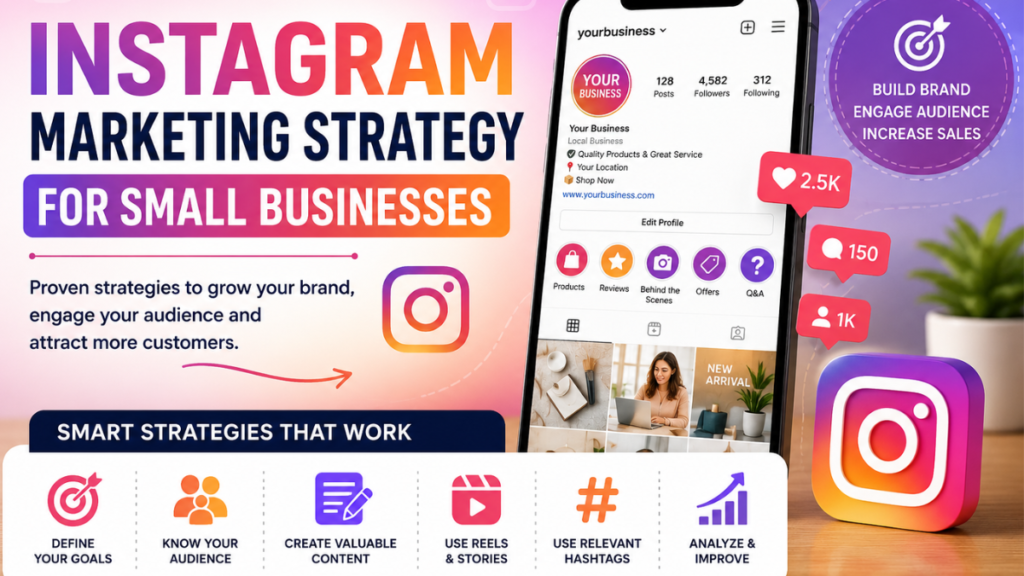
Instagram has become an important marketing platform for small businesses. With the right strategy, businesses can use Instagram to increase brand awareness, connect with potential customers, showcase products or services, and generate leads.
However, simply posting regularly is not enough. A successful Instagram marketing strategy requires clear goals, quality content, audience research, consistency, and regular performance analysis.
What Is Instagram Marketing?
Instagram marketing is the process of promoting a business, product, or service through Instagram. Businesses can use different features such as posts, Reels, Stories, Highlights, Live videos, and direct messages to communicate with their audience.
For small businesses, Instagram can be especially useful because it provides opportunities to build a recognizable brand without requiring a huge marketing budget.
1. Set Clear Instagram Marketing Goals
Before creating content, decide what you want to achieve.
Your goals could include:
. Increasing brand awareness
. Getting more followers
. Generating leads
. Increasing website traffic
. Promoting products or services
. Increasing sales
. Building customer relationships
Your goals should be specific and measurable. For example, instead of saying “I want more engagement,” you could aim to increase meaningful interactions over a specific period.
2. Optimize Your Instagram Business Profile
Your Instagram profile is often the first place potential customers learn about your business. Make it clear, professional, and easy to understand.
Your profile should include:
. A recognizable profile picture or logo
. A clear username
. A short business description
. Your location, if relevant
. Your website link
. A call to action
. Contact information
Your bio should quickly answer three questions: **What do you offer? Who is it for? How can customers contact you?**
3. Understand Your Target Audience
Successful Instagram marketing starts with understanding your audience.
Think about:
. Their age group
. Interests
. Location
. Problems and needs
. Content they enjoy
. Questions they frequently ask
. Products or services they are looking for
For example, a local bakery might create content around new products, behind-the-scenes baking, special offers, customer favorites, and local events.
Understanding your audience helps you create content that is useful rather than simply promotional.
4. Create Different Types of Content
Avoid posting the same type of content every day. A variety of content keeps your profile interesting.
You can create:
Educational Content
Share tips, tutorials, checklists, and answers to common customer questions.
Entertaining Content
Use relatable situations, humor, trends, and creative videos that fit your brand.
Promotional Content
Showcase products, services, offers, launches, and special announcements.
Behind-the-Scenes Content
Give followers a look at your workplace, team, production process, or daily activities.
CustomerShare-Focused Content
genuine customer feedback, testimonials, frequently asked questions, and user-generated content when you have permission to use it.
5. Use Instagram Reels
Reels can be an effective way for small businesses to reach people who do not already follow their account.
Short videos can be used for:
. Product demonstrations
. Quick tips
. Tutorials
. Before-and-after presentations
. Behind-the-scenes videos
. Frequently asked questions
. Business introductions
. Educational content
Focus on creating useful or entertaining videos rather than trying to follow every trend.
6. Use Instagram Stories Consistently
Instagram Stories are useful for maintaining regular communication with your audience.
You can use Stories to share:
. Daily updates
. Polls
. Questions
. Product previews
. New arrivals
. Limited-time announcements
. Customer reviews
. Behind-the-scenes content
Interactive features such as polls and question stickers can also encourage followers to participate and provide useful insights about their interests.
7. Write Strong Captions
A good caption should support the visual content and encourage people to take action.
Instead of simply writing a product name, explain its benefit or tell a short story.
A simple caption structure can be:
Hook → Value → Call to Action
For example:
“Struggling to get more local customers? Start by optimizing your Google Business Profile, creating useful local content, and collecting genuine reviews. Save this post for your next marketing update.”
8. Use Relevant Hashtags
Hashtags can help organize and discover content, but they should be relevant to your business and post.
For example, a local digital marketing business might use hashtags related to:
. Digital marketing
. Instagram marketing
. Small business marketing
. Local business
. SEO
. Social media marketing
Avoid adding unrelated hashtags simply because they are popular. Relevance is more important than using a large number of hashtags.
9. Engage With Your Audience
Instagram marketing is not only about publishing content. Building relationships is equally important.
Respond to genuine comments and questions, interact with relevant conversations, and reply professionally to customer messages.
When people feel that a business listens to them, they may be more likely to trust and remember that business.
10. Create a Content Calendar
A content calendar helps you stay consistent and organized.
For example, a weekly plan could include:
. Monday: Educational post
. Tuesday: Instagram Story
. Wednesday: Reel
. Thursday: Customer-focused content
. Friday: Promotional post
. Saturday: Behind-the-scenes Story
. Sunday: Helpful tip or community content
Your schedule does not have to be exactly the same every week. Adjust it according to your audience and performance data.
11. Use Instagram Ads Carefully
Organic content can help build an audience, while Instagram advertising can help businesses reach specific groups of potential customers.
Before running an ad, define:
. Campaign objective
. Target audience
. Budget
. Creative
. Offer
. Call to action
. Landing page
Start with a clear objective and test different creatives or audiences. Avoid spending money without knowing what result you are trying to achieve.
12. Collaborate With Relevant Creators and Businesses
Small businesses can also consider collaborations with relevant creators, complementary businesses, or local communities.
For example, a fitness business could collaborate with a healthy food business, while a fashion store could work with a relevant local creator.
Choose collaborations based on audience relevance and credibility rather than follower count alone.
13. Track Your Instagram Performance
Regularly check your Instagram analytics to understand what is working.
Important metrics can include:
. Reach
. Engagement
. Profile visits
. Website clicks
. Shares
. Saves
. Story interactions
. Reel views
.Leads or conversions
If educational Reels consistently receive more saves and shares than promotional posts, you can use that insight when planning future content.
Common Instagram Marketing Mistakes
Small businesses often make a few common mistakes:
. Posting without a clear strategy
. Using poor-quality visuals
. Making every post promotional
. Ignoring comments and messages
. Copying competitors
. Using irrelevant hashtags
. Not having a clear bio
. Posting inconsistently
. Ignoring analytics
. Focusing only on follower numbers
Avoiding these mistakes can make your Instagram presence more useful and professional.
Conclusion
A strong Instagram marketing strategy for small businesses is built around clear goals, audience understanding, valuable content, consistency, engagement, and performance tracking.
You do not need to post constantly or have a massive budget to get started. Focus on understanding your customers, creating useful content, presenting your business professionally, and learning from your analytics.
With consistent effort and a customer-focused approach, Instagram can become an effective channel for building brand awareness, generating leads, and growing your small business.

0 Comments
Leave a Comment